Pittsboro has long been known as a small county-seat town on the western edge of the Triangle. That description still fits, at least in part. But it no longer tells the whole story.
Over the past several years, Pittsboro has become one of Central North Carolina’s most closely watched growth markets. New neighborhoods are taking shape, commercial development is expanding, and Chatham County is attracting residents and employers that might once have looked primarily to Wake, Durham, or Orange counties.
Population estimates help put that change into perspective. According to the U.S. Census Bureau, Pittsboro grew from a 2020 population estimate base of 4,542 residents to an estimated 5,054 residents in 2025. That works out to growth of roughly 11.3% in five years. North Carolina’s population grew by approximately 6.9% during the same period.
The larger county is growing quickly as well. Chatham County’s population increased from about 76,300 residents in 2020 to more than 84,200 in 2025.
Pittsboro is not becoming another Cary overnight, nor would most residents want it to. The town is still relatively small, and its appeal is tied partly to the fact that it does not feel like a fully built-out Triangle suburb. Still, the direction is hard to miss. More homes, businesses, roads, schools, and public services are coming, and they are changing how Pittsboro fits into the broader region.
Pittsboro Growth at a Glance
| Growth indicator | Current data |
| Pittsboro population growth, 2020–2025 | Approximately 11.3% |
| Pittsboro estimated population, 2025 | 5,054 |
| Chatham County population, 2025 | 84,207 |
| Projected Chatham County population, 2050 | 112,923 |
| Maximum homes planned within Chatham Park | Up to 22,000 |
| Planned nonresidential space within Chatham Park | Up to 22 million square feet |
Sources: U.S. Census Bureau, North Carolina Office of State Budget and Management, and Town of Pittsboro planning documents.
1. Pittsboro Offers Triangle Access Without the Typical Suburban Feel
Location is one of Pittsboro’s strongest advantages.
The town sits southwest of Chapel Hill, west of Raleigh and Cary, and north of Sanford. U.S. 64 is the primary east-west route toward Apex and Cary, while U.S. 15-501 connects Pittsboro with Chapel Hill to the north and Sanford to the south.
That positioning works well for households whose daily lives are spread across several parts of Central North Carolina. One person may work near UNC or UNC Health in Chapel Hill, while another travels toward Cary or Research Triangle Park. A family may have relatives in Sanford but still need regular access to Raleigh.
Pittsboro is not the closest option for every Triangle commuter. The Census Bureau reports an average commute time of approximately 30.8 minutes. Travel to downtown Raleigh or eastern portions of the Triangle can take considerably longer, especially during peak hours.
For many buyers, though, that trade-off is acceptable. They may spend more time in the car but gain a larger lot, newer construction, access to acreage, or a quieter setting than they could reasonably find at the same price in Wake or Orange County.
It is worth testing the commute rather than relying on a map. A home that looks convenient at 11 a.m. may feel very different during the weekday rush. Buyers considering the broader region can also use Adcock’s Triangle real estate resources to compare Pittsboro with Raleigh, Durham, Cary, Apex, and nearby communities.
2. Chatham Park Is Changing the Scale of Development
Any serious discussion of Pittsboro’s population growth has to include Chatham Park.
The master-planned development encompasses approximately 7,100 acres within Pittsboro and its surrounding planning jurisdiction. Under the framework approved by the Town of Pittsboro, the project may eventually include as many as 22,000 homes and up to 22 million square feet of office, research, retail, commercial, and community space.
Those are long-term maximums, not a prediction of what Pittsboro will look like next year. Chatham Park is being built in phases, and full development will take decades. Plans may also change as housing demand, financing, infrastructure capacity, and market conditions evolve.
Chatham Park is also set to be home to Asteria, only the second announced Storyliving by Disney community in the United States. Planned for approximately 1,500 acres, Asteria is expected to include more than 4,000 residences, including single-family and multifamily homes, with some homesites designated for adults 55 and older. Disney expects home sales to begin in fall 2027. The community will be Disney-branded and managed, developed by DMB Development, with homes built and sold by third-party builders.
Even with those qualifications, the project is large enough to influence nearly every part of Pittsboro’s future.
Unlike a conventional subdivision built around one housing type, Chatham Park includes a mix of single-family homes, townhomes, apartments, condominiums, age-targeted communities, and properties at different price points. That variety matters because Pittsboro’s growth is not coming from one type of buyer.
Some residents want a larger detached home with modern amenities. Others are looking for lower-maintenance living, a smaller footprint, or a neighborhood where shops and restaurants are nearby.
Commercial districts such as MOSAIC are intended to provide restaurants, offices, entertainment, events, apartments, and everyday services within the larger development. The practical goal is straightforward: residents should not have to drive to Cary, Apex, or Chapel Hill every time they want dinner, a medical appointment, or basic shopping.
That transition is already underway. Pittsboro is slowly becoming a place where more people can live, work, shop, and spend their free time without leaving town for every need.
3. Buyers Can Still Find Housing Options That Are Scarce Elsewhere
Pittsboro should not be mistaken for a bargain market. It may once have been viewed as an inexpensive alternative to Chapel Hill or western Wake County, but rising demand and a growing supply of higher-end new construction have changed that calculation.
Still, Pittsboro often offers something more valuable than a lower sticker price: choice.
Depending on the location, buyers may find:
- Historic and older homes near downtown
- New homes in master-planned communities
- Townhomes and lower-maintenance properties
- Custom homes on larger lots
- Golf-course communities
- Rural homes and acreage outside town
- Properties near Jordan Lake or the Haw River
- Active-adult and age-targeted neighborhoods
That range is increasingly difficult to find in more mature Triangle suburbs. In Cary or central Chapel Hill, for example, a buyer may have to choose between a smaller established home and expensive infill construction. Around Pittsboro, there are still places where buyers can consider newer homes, wooded lots, custom construction, or several acres of land.
The Census Bureau reports that the median value of owner-occupied housing in Pittsboro was approximately $376,300 during the 2020–2024 survey period. Chapel Hill’s comparable figure was approximately Pittsboro and Siler City real estate.
Those numbers are useful for broad context, but they should not be treated as current sale prices. Census estimates include homes purchased years earlier and do not reflect the exact conditions of today’s active market.
The more useful comparison is often what the buyer receives for the money. A Pittsboro property may offer more square footage, a newer floor plan, a larger yard, or greater privacy than a similarly priced property closer to the Triangle’s urban core.
Buyers comparing neighborhoods, new construction, acreage, or other property types can explore Pittsboro and Siler City real estate with a local Adcock Real Estate Services professional.
4. Chatham County’s Long-Term Growth Outlook Remains Strong
Pittsboro is not growing in isolation. It is benefiting from broader changes across Chatham County.
The North Carolina Office of State Budget and Management projects that the county’s population will increase from approximately 84,200 residents in 2025 to nearly 112,900 by 2050. That would amount to roughly 34% growth over 25 years.
Population projections are not promises. Mortgage rates, housing costs, infrastructure constraints, development approvals, economic conditions, and migration patterns can all speed up or slow down growth.
Even so, the state’s projection matches what is already visible. Chatham County is gradually shifting from a mostly rural county on the Triangle’s edge to a more connected residential and economic center.
Pittsboro is likely to receive a meaningful share of that growth. It is the county seat, it sits along major regional highways, and it contains large areas already approved for residential and commercial development. It also serves as a center for county government, health care, education, legal services, retail, and professional businesses.
In other words, Pittsboro is not simply receiving spillover from nearby cities. It is developing a larger regional role of its own.
5. Employment Growth Is Beginning to Move Beyond Raleigh and Durham
For years, living in Pittsboro often meant commuting to Chapel Hill, Durham, Raleigh, Cary, or Research Triangle Park. Those employment centers will continue to matter, but Chatham County is attracting more investment within its own borders.
One of the most prominent examples was Wolfspeed’s announcement of a semiconductor-materials manufacturing campus near Siler City. The North Carolina Department of Commerce originally described the project as an investment of approximately $5 billion, with a goal of creating more than 1,800 jobs by 2030. The facility is now built and is gradually ramping up following Wolfspeed’s 2025 restructuring.
Economic-development announcements deserve a measured reading. Construction schedules can move. Hiring targets can change. Corporate finances, government incentives, and industry demand can all affect whether a project unfolds exactly as announced.
A buyer should never choose a home based solely on a future job count in a press release.
The broader trend, however, is more meaningful than any single project. Chatham County is increasingly being considered for advanced manufacturing, medical services, construction-related businesses, retail, entrepreneurship, and professional employment.
That creates the potential for demand from two directions. Some Pittsboro residents will continue commuting into the Triangle, while others may work in Siler City, Moncure, or elsewhere within Chatham County.
Over time, that could make Pittsboro less dependent on being a bedroom community and more connected to a countywide employment market.
6. Roads, Utilities, and Public Facilities Are Catching Up With Growth
New homes cannot keep coming without corresponding investment in roads, utilities, schools, parks, emergency services, and other public infrastructure.
One major transportation project is Chatham Park Way, a planned route connecting U.S. 15-501 south of Pittsboro with U.S. 64 Business. North Carolina Department of Transportation documents describe work involving grading, drainage, utilities, bridges, paving, retaining walls, and traffic signals.
The route matters because Pittsboro’s older street network was built for a much smaller community. Additional connections can move traffic around the historic center, improve access to new neighborhoods, and create more direct routes to developing commercial areas.
The benefits will not arrive without inconvenience. People buying in active development areas should expect construction vehicles, temporary lane changes, new intersections, road noise, and shifting traffic patterns. A quiet road beside a vacant parcel may not remain quiet once an approved project begins.
School planning is evolving too. Chatham County’s capital planning documents include a future elementary school intended to serve Chatham Park’s North Village, although anticipated timelines have been adjusted in response to enrollment estimates.
That is fairly typical in a growing area. Development rarely follows a smooth line. A neighborhood may build faster than expected, while a school, road, or utility project moves more slowly. In another part of town, the reverse may happen.
Buyers should look at approved plans and current timelines, but they should also leave room for change.
7. Pittsboro Still Has a Distinct Local Identity
Growth statistics explain why Pittsboro is receiving attention. They do not fully explain why people choose to live there.
Pittsboro had an identity before the large developments arrived. That gives it an advantage over places built almost entirely around newer subdivisions and shopping centers.
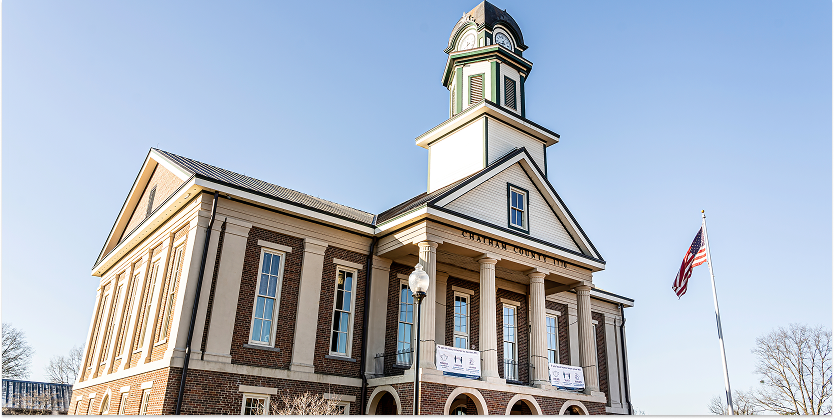
Historic downtown is centered around the Chatham County Courthouse and includes local restaurants, galleries, professional offices, independent shops, and institutions that have served the community for years. The area feels lived-in rather than newly assembled.
At the same time, “Pittsboro” can describe several very different lifestyles.
A buyer might choose a home near downtown and walk to local businesses. Another may prefer a newer neighborhood in Chatham Park. A few miles away, someone else may own a wooded property with a well, septic system, and enough land for a garden, workshop, or small farm.
Those properties may share a mailing address, but the day-to-day experience can be completely different.
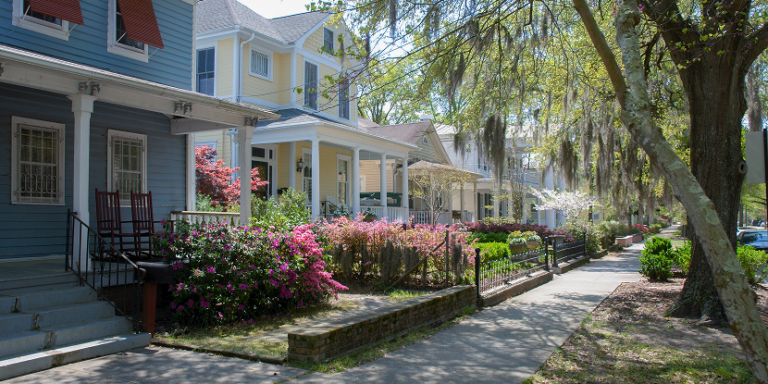
That variety is one of Pittsboro’s strengths. The town is not offering buyers a single, standardized version of suburban life.
Preserving that character will become more difficult as development continues. The challenge is not stopping growth altogether. It is making sure new development adds useful housing, services, and infrastructure without erasing the qualities that made Pittsboro appealing in the first place.
8. Outdoor Access Is More Than a Neighborhood Amenity
Pittsboro’s location provides relatively easy access to some of Central North Carolina’s most valued natural areas.
Jordan Lake State Recreation Area is one of the region’s major destinations for boating, fishing, camping, hiking, and wildlife viewing. The Haw River runs through Chatham County, and the surrounding landscape still includes substantial areas of forest, farmland, and open space.
Within Chatham Park, approved plans call for at least 1,320 acres of open space and a minimum of 667 acres of parkland at full buildout. Greenways and public parks are expected to connect neighborhoods and provide recreation as development expands.
The appeal goes beyond having a trail around a subdivision pond. Pittsboro offers the possibility of living within reach of Triangle employment while remaining close to water, woods, rural roads, and larger stretches of undeveloped land.
For buyers leaving a denser suburb, that difference can be significant. They may still want access to restaurants and services, but they do not necessarily want every nearby parcel covered by pavement.
Of course, growth can gradually change that balance. Buyers who value a particular wooded view or open field should find out who owns the land and what development is already permitted there.
9. Shopping, Dining, and Everyday Services Are Expanding
A decade or two ago, one of the common frustrations of living in Pittsboro was the need to leave town for a wider selection of shopping, dining, entertainment, or specialized services.
That is becoming less true.
New commercial areas are bringing restaurants, offices, apartments, entertainment spaces, health-related services, and neighborhood retail closer to residents. The Chatham County Economic Development Corporation has described MOSAIC as a major commercial gateway to Chatham Park. Additional tenants have continued to open or announce plans within the development.
Downtown Pittsboro and the newer commercial districts are not interchangeable, nor should they be.
Downtown offers local businesses, historic character, and a sense of place. New mixed-use developments provide the larger buildings, parking, apartments, and commercial space needed to serve a growing population.
The healthiest outcome is probably not one district replacing the other. Pittsboro will be stronger if downtown remains active while newer commercial areas provide the services and capacity the town now needs.
That balance will require thoughtful planning. Residents want more convenience, but many also want Pittsboro to remain recognizably Pittsboro.
10. Buyers Need to Understand the Trade-Offs
Growth can create opportunity, but it also introduces uncertainty.
Home prices have risen, particularly for new construction, custom homes, and properties on the Chapel Hill or Triangle side of the county. Traffic is getting heavier. Rural views can disappear when nearby land is developed. Construction may continue around some neighborhoods for years.
There can also be major differences between properties that appear similar on a listing.
A home may be inside Pittsboro town limits, within the town’s extraterritorial planning jurisdiction, in an unincorporated part of Chatham County, or inside a master-planned community with its own fees and rules. Water and sewer service, taxes, road maintenance, school assignments, and development standards may vary accordingly.
Buyers should investigate more than the condition of the house. Useful questions include:
- What development has already been approved on nearby land?
- Is the property served by municipal water and sewer, or by a private well and septic system?
- Are new roads, intersections, or commercial projects planned nearby?
- Does the property have homeowners association dues or additional community fees?
- Is it located inside Pittsboro’s municipal limits?
- What is the current school assignment?
- Who maintains the road?
- Could the surrounding area look substantially different in five or ten years?
This kind of due diligence matters in every real estate transaction. In a place changing as quickly as Pittsboro, it matters even more.
Is Pittsboro a Good Place to Live?
Pittsboro can be an excellent fit for buyers who want access to the Triangle but are not looking for a conventional suburban environment.
It tends to appeal to people who value larger properties, new construction, outdoor recreation, small-town character, and the possibility of long-term regional growth. It can also work well for households whose jobs or family obligations are split between Chapel Hill, Cary, Raleigh, Sanford, and other parts of Central North Carolina.
It may be less appealing to someone who needs a consistently short commute to downtown Raleigh, relies heavily on public transportation, or wants a fully developed urban setting immediately outside the front door.
The biggest attraction is the combination. Pittsboro has an established downtown, major new development, varied housing, access to regional employment, and enough undeveloped land to keep changing for years.
That is why Pittsboro is increasingly described as one of North Carolina’s fastest-growing areas. It is not simply adding subdivisions and residents. It is gradually developing from a small county seat on the edge of the Triangle into a more complete residential, commercial, and employment center.
Frequently Asked Questions
How fast is Pittsboro, NC, growing?
The U.S. Census Bureau estimates that Pittsboro’s population grew by approximately 11.3% between its April 2020 estimate base and July 2025. The town’s estimated population reached 5,054 residents in 2025.
What is causing Pittsboro’s growth?
Several factors are contributing to the area’s growth, including its proximity to Chapel Hill, Cary, Raleigh, and Sanford; the long-term development of Chatham Park; demand for housing throughout the Triangle; expanding commercial services; and broader population and employment growth across Chatham County.
Is Pittsboro part of the Research Triangle?
Pittsboro is generally considered part of the broader Triangle region, although it sits outside the core Raleigh-Durham-Chapel Hill urban area. Many residents commute to Triangle employment centers while living in Chatham County.
Is Pittsboro still affordable?
Pittsboro may provide more land, newer housing, or additional square footage than some established Triangle markets, but it is no longer an inexpensive option in every category. New construction, luxury homes, acreage, and properties closer to Chapel Hill can command substantial prices.
What is Chatham Park?
Chatham Park is a large master-planned community in Pittsboro. Town planning documents allow for a long-term maximum of up to 22,000 residential units and 22 million square feet of nonresidential space, along with substantial parkland and open space.
Is Pittsboro a practical location for commuters?
It can be, particularly for households traveling toward Chapel Hill, Apex, Cary, Sanford, or multiple parts of the Triangle. The Census Bureau reports a mean travel time to work of approximately 30.8 minutes for Pittsboro residents, although actual drive times vary considerably by destination and time of day. Buyers should test their expected route during normal commuting hours.